Find your gut triggers. In days, not years.
Tell GutSync what you ate in a sentence or a photo. It finds the foods behind your symptoms, tests every suspect, and tells you when it knows.
7 days of Pro free Card required
The diary is the hard part.
Your GI says keep a food diary. So you log every meal for weeks, match each flare to something you ate yesterday, cut a suspect, bring it back, and squint at the results. Most people quit. The rest drown in notes.
60M+
Americans live with a chronic digestive disease.
3 in 4
U.S. adults who meet the criteria for IBS have never been diagnosed with it.
48 hrs
A trigger can hit two days after you eat it. Your last meal is usually the wrong suspect.
97%
of people who download a food-diary app quit before it sticks. GutSync was built to outlast week two.
Log a meal in one sentence.
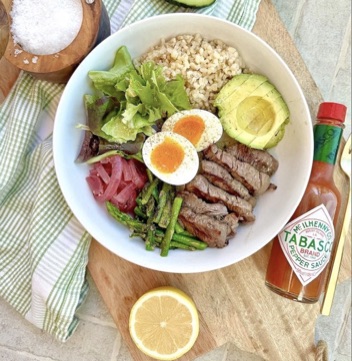
Send a photo, say it out loud or type it the way you’d text a friend. GutSync logs the foods, portions and times, checks them against your history, and tells you what it noticed.
It sees what you didn’t mention.
It follows how you actually talk.
It remembers your usual.
All three land in one timeline.So does a text to the bot.
Or skip the app and just text it.
GutSync is a contact in Telegram. Send what you had for dinner, a photo of the plate, or “rough morning, type 6”. It logs the entry and writes back like someone who knows your history.
Log with a text or a photo. Ask about your patterns.
Coming soon. Same bot, same history.
A nudge in the evening if you haven’t logged, and a note in the morning when one of your cases moves.
Today
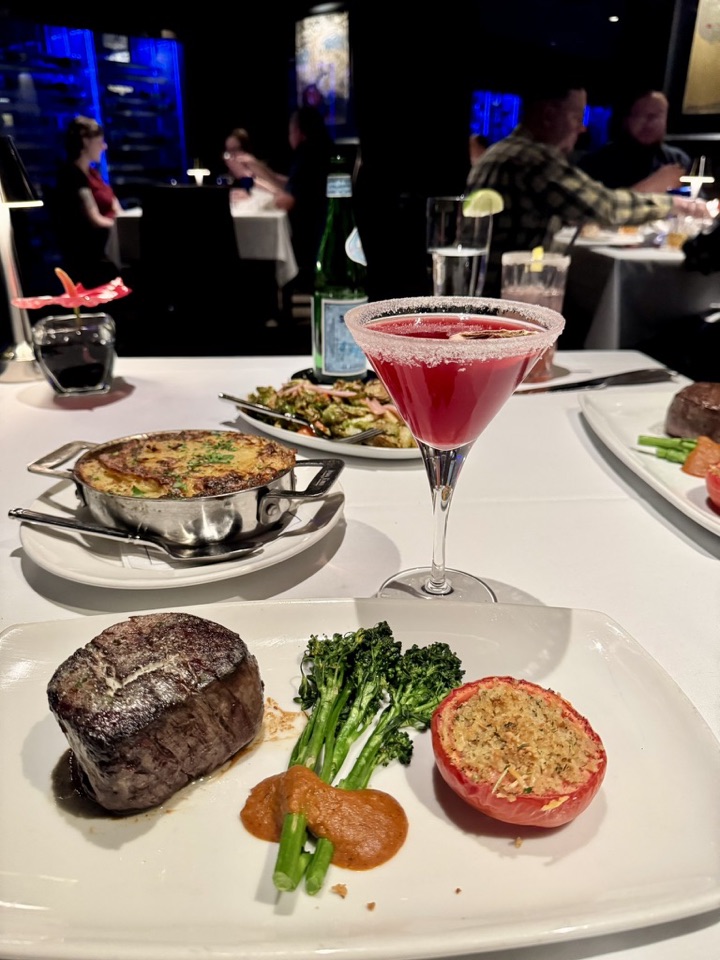
chandlers for anniversary dinner
Matched it to Chandlers’ menu ✅ Logged the filet mignon (~10 oz), broccolini and stuffed tomato. The cocktail looks like their Huckleberry Lemon Drop. Did you have some of the potatoes in the back too?
Every trigger comes with a number.
GutSync compares each food against your own history. You see how much more often symptoms follow it, how many hours later, and how many days of evidence back it up.
It checks your week before it blames your food.
Tell GutSync about a trip, a hard stretch at work or a new supplement. It marks the dates on your timeline, so a flare in the middle of them doesn’t get pinned on lunch.
A flare during the trip is explained by the trip. It doesn’t rewrite your baseline triggers.
Suspect a food? Put it on trial.
Name the food you suspect. GutSync runs the trial on the logging you already do, and only the numbers can close it.
Two ways to run a case
Challenge protocol
A guided elimination with a planned reintroduction. The strongest evidence on the shortest clock.
Observational
No diet changes. Keep logging as usual and the case scores each new day in the background.
Name your suspect
A food, an ingredient, a habit. One tap drafts the trial: what to cut, for how long, and what counts as evidence.
It runs itself
No study forms, no extra check-ins. The case reads the entries you already make and sets aside any day that can’t count.
The verdict lands
Confirmed means you finally know. Cleared means a food you feared comes back to the table.
Generic on day 7. Specific on day 60.
Ask the same question in week one and week nine. The second answer knows your open cases, last night’s sleep and the dinners that went well.
Asking on
Day 7
It remembers what you tell it.
Your goals, your diagnosis, how you take your coffee, the paper your GI mentioned. Say it once, and every answer after that takes it into account.
It works while you don’t.
GutSync reads your data every day and reaches out the moment something moves. Three kinds of message, each on its own clock.
Each one has its own off switch in Settings.
In their words.
Bring a report to your next appointment.
One tap turns your record into a dated, Bristol-aware Health Report. Your GI can read it in two minutes, and every number in it comes from your own entries.
Skip the notebook. Walk in with data.
The export is a clinical document, not a chat log: your entries in order, the Bristol distribution, the trigger table, and the life context that explains the outliers.
Every entry in order, with timestamps. The format your specialist already reads.
Type, color, urgency, and notes, in the vocabulary GI clinicians use.
Travel, illness, diet, stress, annotated alongside symptoms so a flare doesn't read as your baseline.
Each trigger with its lift, timing window, and confidence, ranked.
There is no AI-generated text in the report. Every line traces back to something you logged.
How GutSync compares.
Next to a paper diary, a tracker app and a general-purpose AI chat, on the things that decide whether you get an answer.
| Capability | Paper diary | Tracker apps | General AI chat | GutSync |
|---|---|---|---|---|
| How you log | Pen and paper | Forms and dropdowns | Paste it in, every time | A sentence, a photo or a text |
| What it tracks | Whatever you remember | Food and symptoms | Whatever you paste | Food, symptoms, BMs, sleep, mood, meds and life context |
| Finds triggers | You do the math | Basic charts | Plausible guesses, no statistics | Your triggers, with the numbers to prove it |
| Proves a trigger | Trial and error | Preset diets | Can’t run a trial | Cases that end in a verdict |
| Remembers you | Only on paper | Settings, not context | Loosely, with no record | Goals, cases, safe foods and life context |
| Reaches out | Never | Generic reminders | Never | Works 24/7, pings you when a case moves |
| For your GI | A photo of a notebook | A CSV export | A chat transcript | A Bristol-aware Health Report |
Compared on published features, September 2026. The named-product detail is in the FAQ.
- Paper diary
- Pen and paper
- Tracker apps
- Forms and dropdowns
- General AI chat
- Paste it in, every time
- GutSync
- A sentence, a photo or a text
- Paper diary
- Whatever you remember
- Tracker apps
- Food and symptoms
- General AI chat
- Whatever you paste
- GutSync
- Food, symptoms, BMs, sleep, mood, meds and life context
- Paper diary
- You do the math
- Tracker apps
- Basic charts
- General AI chat
- Plausible guesses, no statistics
- GutSync
- Your triggers, with the numbers to prove it
- Paper diary
- Trial and error
- Tracker apps
- Preset diets
- General AI chat
- Can’t run a trial
- GutSync
- Cases that end in a verdict
- Paper diary
- Only on paper
- Tracker apps
- Settings, not context
- General AI chat
- Loosely, with no record
- GutSync
- Goals, cases, safe foods and life context
- Paper diary
- Never
- Tracker apps
- Generic reminders
- General AI chat
- Never
- GutSync
- Works 24/7, pings you when a case moves
- Paper diary
- A photo of a notebook
- Tracker apps
- A CSV export
- General AI chat
- A chat transcript
- GutSync
- A Bristol-aware Health Report
Compared on published features, September 2026. The named-product detail is in the FAQ.
Less than a GI copay.
Every new account starts with seven days of Pro, on either plan.
From $12/mo cancel anytime
Plans renew automatically every month until you cancel in Settings → Billing.
- Encrypted at rest and in transit
- Never used to train models
- Export or delete everything, any time
Common questions.
No. It’s the diary your GI wishes you’d kept. GutSync brings structured data to your appointments (Bristol distribution, trigger correlations, context overlays), but it doesn’t diagnose, prescribe, or replace clinical care.
A general AI chat only knows what you paste into it, and a new conversation starts from zero. GutSync keeps your whole record: meals, symptoms, bowel movements, sleep, mood, meds and life context, logged from a sentence, a photo or a text. A statistics engine compares each food against your own symptom-free days and reports the lift, the timing window and how many days of evidence back it up. The AI writes the sentences, and the engine computes every number it quotes. GutSync also remembers your goals, open cases and safe foods between conversations, runs Cases that end in a verdict, checks in when your data changes, and exports a Bristol-aware Health Report for your GI.
For IBD (Crohn’s or ulcerative colitis), GERD and SIBO, yes: GutSync logs symptoms, Bristol type and life context next to what you eat, scores each food against your own history, and can run a case on a suspect. Celiac is different. It’s diagnosed with blood tests and usually a biopsy while you’re still eating gluten, and the treatment is a strict gluten-free diet, not trigger-hunting. Don’t cut gluten before you’re tested, and never run a gluten challenge without your doctor. If you have celiac, use GutSync to log symptoms and accidental exposures, not to test gluten. Whatever the diagnosis, GutSync supports your care and doesn’t replace it.
Other apps make you fill out forms and read your own charts. GutSync lets you talk or type in plain language, parses every entry into structured data automatically, and correlates patterns across food, symptoms, bowel movements, sleep, mood, medications, and life context. It also remembers what you’ve already told it, so the answers get sharper the longer you stay.
- Entry style. Forms, or forms plus barcode, vs talk, type, or snap a photo.
- Photo logging. None vs AI reads every item on the plate into your catalog.
- What it tracks. Food and symptoms (FODMAP in Fig) vs food, symptoms, BMs, sleep, mood, meds, and life context.
- Pattern finding. Basic charts vs measured lift, timing window, and confidence tier against your own baseline.
- Proving a trigger. Preset diet plans or manual elimination vs Cases: trigger trials on autopilot that end in a verdict.
- Memory of you. None vs remembers your priorities, open cases, and history.
- GI-visit export. Limited or CSV vs a Bristol-aware PDF with context overlays.
- Conversational interface. None vs chat with your timeline.
- Logging on the go. App only vs texting the bot from Telegram.
A GutSync Case is a standing experiment on one suspect, and no: the diet part is optional. Run it as a challenge case and GutSync guides a real elimination-and-challenge protocol (cut it for about two weeks, bring it back deliberately, compare both stretches against your own baseline, the same n-of-1 design clinicians use). Or run it observational and change nothing at all: the case scores the contrast already in your normal weeks. Either way it runs on autopilot off the logging you already do, counts honest evidence only (washouts and thin days don’t score), and closes with a verdict: confirmed, cleared, or an honest inconclusive. Slips aren’t failures; a slip day is simply set aside. Medication cases always run observational: GutSync never tells you to stop or change a prescription.
Most people see their first useful pattern read at ~7 days. More stable reads on dairy, gluten, and timing often take around 30 days. The longer you log, the sharper and more personalized the read gets.
Yes. GutSync reads your data every day, and open Cases update themselves from the entries you already make. It gets in touch when something changes: a case update by email or in chat when a case changes tier, stalls or is ready for a verdict (one a day at most), and The Read, a Monday email with the pattern that moved that week and the number behind it. If you’ve connected Telegram, it also sends an evening text on days you forgot to log.
Log meals and symptoms for a few weeks, compare the days you ate a suspect with the days you didn’t (allowing for delayed reactions, since some foods take a day or more), then test the strongest suspect with an elimination and a planned reintroduction. That’s the method GI dietitians use, and it’s a lot of work: the logging and the math take hours. GutSync does both: you log in a sentence or a photo, it scores each food against your own baseline inside that food’s reaction window, and a Case runs the elimination and the challenge for you. Talk to your clinician before cutting whole food groups, and never deliberately challenge a known allergen.
Yes. GutSync tags every food by trigger family, including high-FODMAP foods, garlic and onion, legumes, sugar alcohols and dairy, and scores each family against your own baseline with its own reaction window. During reintroduction, open a challenge Case on one family at a time and GutSync tracks the elimination, the challenge and the washout from your normal logging. It doesn’t prescribe a diet, so use it alongside your dietitian’s plan.
One tap. The PDF report is built for GI specialists: chronological entries, Bristol distribution, trigger correlations, active life contexts. Read it like a chart, hand it to your doctor before the appointment.
Your timeline is yours. We don’t sell it, share it, or use it to train external models, and you can export everything at any time. Cancel anytime, and delete your account in one place: that removes your timeline, memories, conversations and cases from GutSync. A few copies live outside GutSync on their own schedules. Stripe keeps billing records, the chat app you texted keeps its copy of those messages, and service providers can hold backups and security logs for a limited time. The privacy policy lists each one.
Every new account starts with 7 days of full Pro, on either plan: start a Pro free trial (card required, nothing charged if you cancel before it ends), or subscribe to Basic and get a week of Pro included. Basic stays Basic afterward, at the same price. Basic covers effortless logging (web and Telegram) plus answers about your recent history; Pro adds the trigger engine, cases with verdicts, compounding memory, and the clinician export. Either plan bills monthly or annually (annual works out to about two months free) and costs less than a typical GI copay. Cancel anytime. Live prices are in the pricing section below.
AI inference costs real money on every entry, and we pay for it so your data doesn’t. Selling your timeline, training third-party models on it, or showing you ads would all be cheaper for us and worse for you. A subscription keeps the incentives aligned: we win when the product gets sharper, not when your attention does.
Both. The same model parses “sourdough sandwich for lunch, kinda heavy after” whether you said it or typed it. Voice tends to win on the way to work; typing wins late at night. Pick whichever lets you log without breaking your day.
Manual food logging breaks because it asks too much, every day. Forms, portions, ingredient lists, all from scratch. GutSync takes the typing out of it: talk, type, or snap a photo and the AI builds the structured entry. The friction goes from “fill out this form” to “say one sentence,” which is the difference between a diary that reaches week 4 and one that doesn’t.
Yes, and it’s the whole idea. Connect Telegram and message the GutSync bot the way you’d text a friend: describe a meal, send a photo, or note a symptom, and it logs a structured entry for you, even when the web app is closed. Telegram is live today, with WhatsApp, Messenger, and Signal on the way. No new app to open.
No, and that’s intentional. GutSync has no mobile app, and any app in the App Store or Google Play calling itself “GutSync” is not us. Rather than add one more icon to your home screen, GutSync meets you where you already talk: message the GutSync bot to log. Telegram is live today, with WhatsApp, Messenger, and Signal on the way. Opening one more app shouldn’t be the price of tracking your gut, and a native app isn’t on our roadmap.
Start with a week.
Most people see a first pattern within seven days. Pro is free for that week. Card required.
“A Campylobacter infection wrecked my gut for almost a year.” Wyatt Cupp, founder. Why I built GutSync